
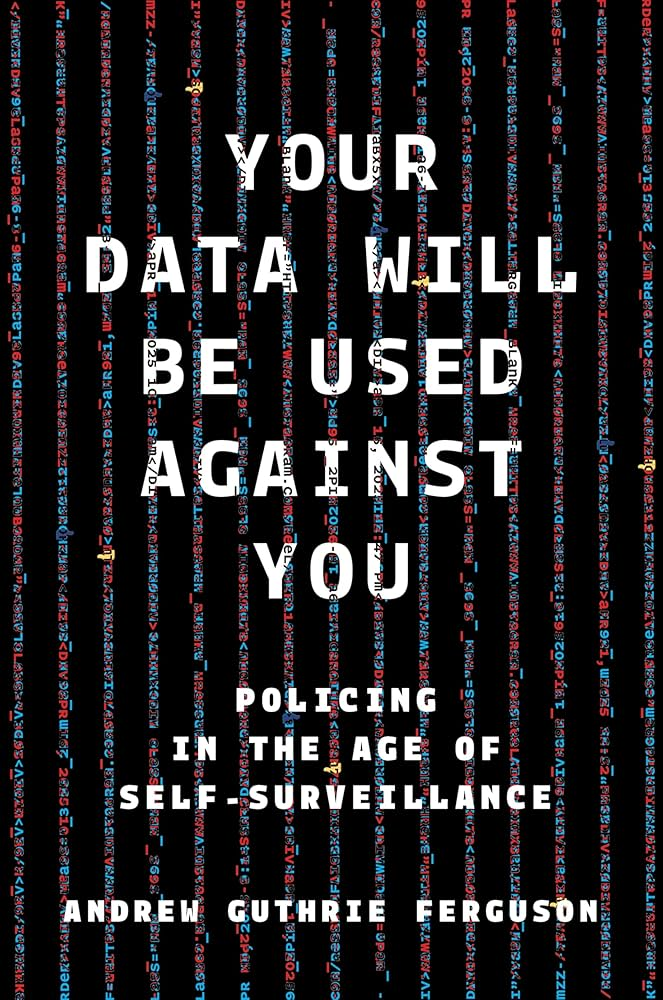
George Washington University Law Professor Andrew Guthrie Ferguson might have a highfalutin-sounding name, but he knows how to speak – and write – in plain English. In his latest book, Your Data Will Be Used Against You, he admonishes, “The only way to truly avoid giving the government open access to our home’s data is to avoid producing it in the first place.” Therein lies the trap of our times; we either can’t or don’t want to avoid creating digital breadcrumbs but once such exist they may be used for what the author calls carceral means (had to look that one up). In modern society, we crave convenience along with what George Carlin once goofed on as “the illusion of security” and in doing so we’ve ceded our privacy over to Big Tech and Big Brother all too eager to tap into that information, be it readily available for free or a fee. As technology rapidly advances, the spirit of the Fourth Amendment, namely what should be considered “reasonable” when it comes to search & seizure, gets foggier. At stake is nothing short of our very autonomy.
Writes Guthrie Ferguson: “The default condition of American life is supposed to be freedom from surveillance.” Yet we’re being surveilled all the time as companies have commercialized public spaces into lucrative data (see this new Boston Globe report or the latest Last Week Tonight on HBO). Toronto nearly reached the point of no return when it toyed with becoming a prototype of Google’s Sidewalk Labs under the auspicious of improving how the city ran. The idea was the creation of a digital downtown whereby omnipresent smart sensors – on streets and in stores, in apartments and parks – would feed information back to the tech giant, making payment systems for everything from e-bike rentals to coffee purchases electronic and therefore supposedly better. One small problem: government officials overlooked their own citizens lack of buy-in to such privacy invasions, killing the project. Perhaps at some point it dawned on these same bureaucrats that there is a limit to how much one wants tech bros to know say, a politician’s most embarrassing search or racy online purchase.
The reader learns of the potential to modernize search, seizure, and surveillance, to have a “smart” Fourth Amendment. “Conceptualizing digital rights is hard,” opines the author, suggesting the complications that come along with “governmental data collection, corporate surveillance capitalism, and the global commoditization of our lived experiences through data.” Near the conclusion, he argues for limits on legislative powers – in sum, that not all data need be treated as digital evidence against the populace – and it’s here where his writing is most colorful. He rips petty, vindictive authoritarians and politicized judges, saying we “shouldn’t be dumb enough to risk it all by trusting those in power.” Preach, Professor! He goes on to celebrate that our nation’s Founders put limits on the government’s ability to investigate wrongdoing because they themselves were law breakers. We have smartphones, smart watches, smart cars, smart homes, on and on. Reading this book, we’re reminded we too need smart approaches when it comes to who we elect to lead and how much rope to give ineffective incumbents.
If you have anything to say about this – or book recommendations – kindly post below (rather than emailing me) to spark conversation. Thank you!