
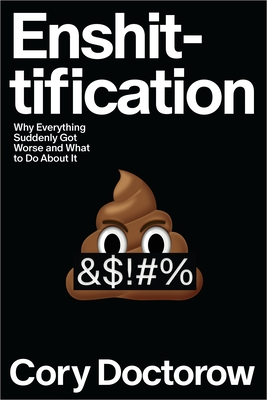
God bless Cory Doctorow. A prolific writer with dozens of books to his credit, he is whip smart and hell bent on fixing all that ails the internet. Doctorow coined the term “enshittification” in 2022, defining it as deliberately worsening a service out of – what else? – pure greed. The focus here is on apps and in Enshittification we’re provided Big Tech’s four-part playbook: at first, be good to users; eventually mistreat them to the benefit of corporate clients; abuse said clients to claw back all value for shareholders; wind up a giant pile of shit. The mission is to achieve an equilibrium between providing a slick interface that people love overseen by management they’ll grow to hate. “We are living in an age of zombie platforms,” writes Doctorow, “platforms that shamble on long after they should have been double-tapped and stuffed in a shallow grave.” Tell us how you really feel, pal.
While all the usual suspects are rounded up, especially those empires so notorious for debasing their ground level labor pools (Amazon, DoorDash, Uber, oh my), what makes this book remarkable is the takedown of almighty Google. Turns out the search giant founded on the principle “don’t be evil” has spent the past two decades perfecting that very thing “once the company’s anticompetitive domination drove complacency.” Once upon a time, Google’s head of advertising lorded over a plot to make search results worse, forcing the user to run multiple queries while therefore being exposed to more ads. Internal memos reveal senior management’s sign-off, what Doctorow likens to a painting contractor watering down its mix so a clueless homeowner would have to pay for twice as much product and multiple coats. He says once Google reached monopolistic status (harkening back to its 2007 bargain to make its search bar the default for iPhones), it stopped growing and started squeezing. Perhaps the only factor keeping it in check is the engineers so horrified by such unethical practices, whistles wet, ready to be blown.
Doctorow is no whiner as, like the best employees we’ve overseen, he defines the problem and offers helpful solutions. He fantasizes about antitrust enforcement and the slow & steady progress being made on such in the European Union (with tactics used to curb corporate power to squelch the reemergence of fascism). “And since tech firms run the same sleazy enshittification playbook in countries all over the world,” he writes, “a successful case in one country can be filed in many others, relying on the facts and arguments that were developed the first time around.” We’re reminded of the old, good internet where tech firms faced consequences for wrecking the things we use, rely on, and love. He sees a good, new internet that is well-regulated, one that instills fear in executives’ hearts, putting those “who don’t get the message out of a job.” You don’t have to love the author’s lefty politics to appreciate his universal message: we deserve better. The World Wide Web as a public entity turned 33 the other day, so enough with the teenage punk antics already; it’s high time to start acting like a fully formed adult.
If you have anything to say about this – or book recommendations – kindly post below (rather than emailing me) to spark conversation. Thank you!